
I started tracking my steps for a simple reason: I learned that a sedentary lifestyle can lead to poor health. “Sedentary” means spending our waking hours sitting or reclining while using very little energy. And here’s the catch: even if we exercise regularly, spending the rest of the day sitting still takes a toll. The hopeful part? A 2026 study found that daily steps offset risks of sedentary behavior. We have more influence over our health than we often think.
So I set out to walk 10,000 steps a day, tracking every one on my phone. What I didn’t expect was that this little daily goal would teach me about perspective, friendship, stuff, household chores, and even balance.
Looking back, every lesson was really about noticing. That’s the heart of Dr. Ellen Langer’s approach to mindfulness. Dr. Langer, a Harvard psychologist often called the mother of mindfulness, says mindfulness isn’t about sitting still or clearing your mind. It’s about actively noticing new things. Its opposite, mindlessness, is living on autopilot. So with each lesson, I’ve added a mindful takeaway.
Here are five lessons tracking my steps taught me.
Parking farther away can actually make life better
I used to circle the lot hunting for the closest spot and get annoyed when someone else grabbed it. Somehow, a close spot meant I was lucky and no spot meant I wasn’t.
Then I started tracking my steps.
Suddenly, the spot far away wasn’t the bad spot. It was the good spot. More steps!
And parking became peaceful. I could pull into any open spot. No circling. No competing. No frustration.
Things aren’t inherently “good” or “bad”; we assign the labels. The spot didn’t change, only my view of it did. How many other small annoyances would ease if we started seeing the “loss” as a win?
Walking made me more creative with my friendships
So much of socializing revolves around sitting: coffee, lunch, dinner, drinks. So I started asking friends to walk instead.
We walked through the park in the rain and the sunshine. We saw the mountains and the sunsets. We met roller skaters. And, most importantly, we met Gandalf.
(Gandalf is a rather unusual goose at City Park who was hatched and raised by a woman named Kim. He has since become something of a park celebrity and, apparently, a prolific baby daddy.) Here he is with some of his flock. Can you pick him out?
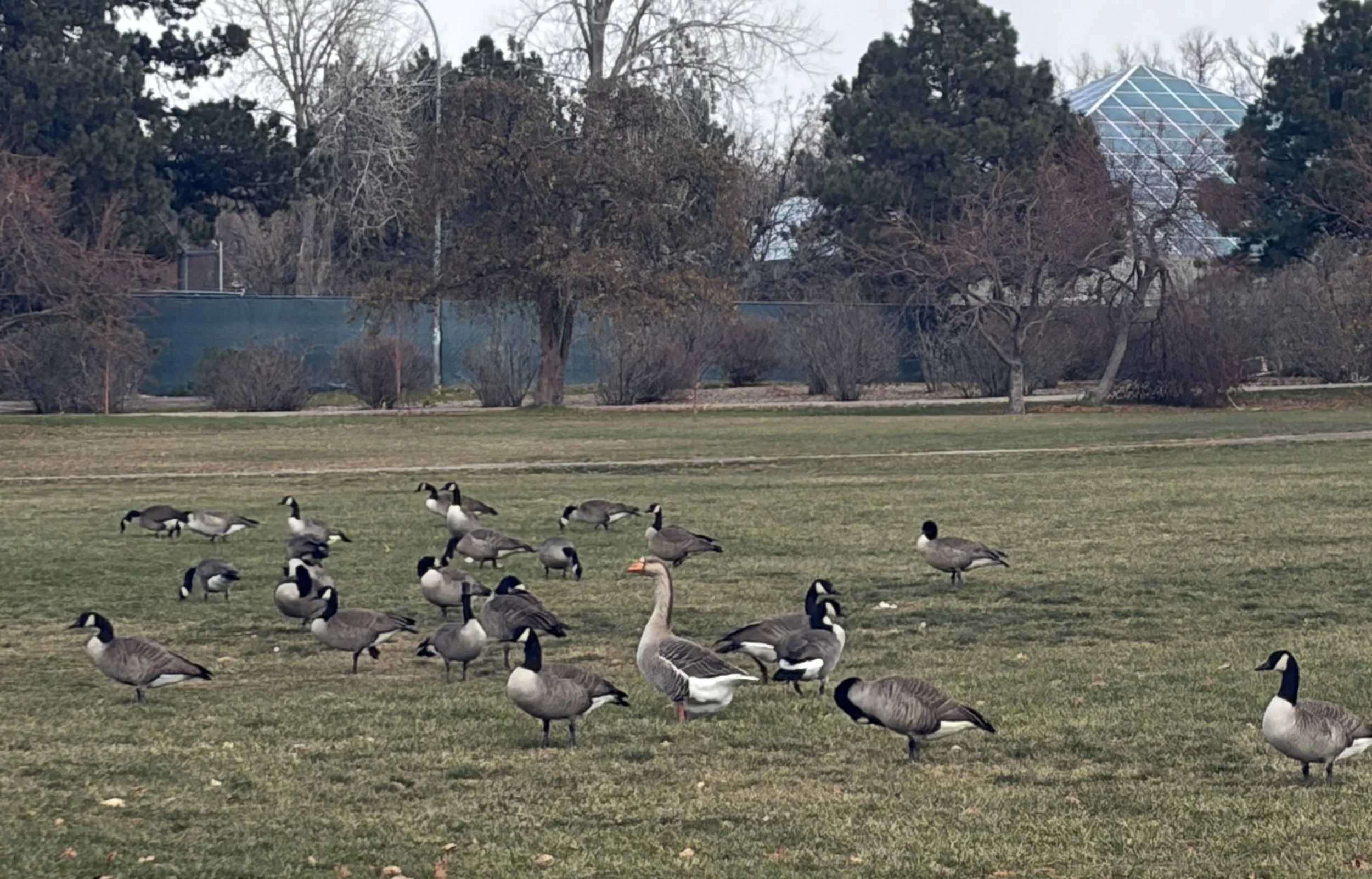
Walking is also surprisingly good for conversation. Side by side, with your eyes on the path instead of on each other, it’s easier to talk about personal things. (Eye contact has never been my strong suit.) Walking became less of an activity and more of something I could weave into my life.
Swapping coffee for a walk pulled me off autopilot. Where else could you do things differently, just by noticing there’s another option?
I started appreciating the inconvenient things
I have a very small watering can. It has always annoyed me. I can water one plant, maybe two, before I have to walk back and refill it.
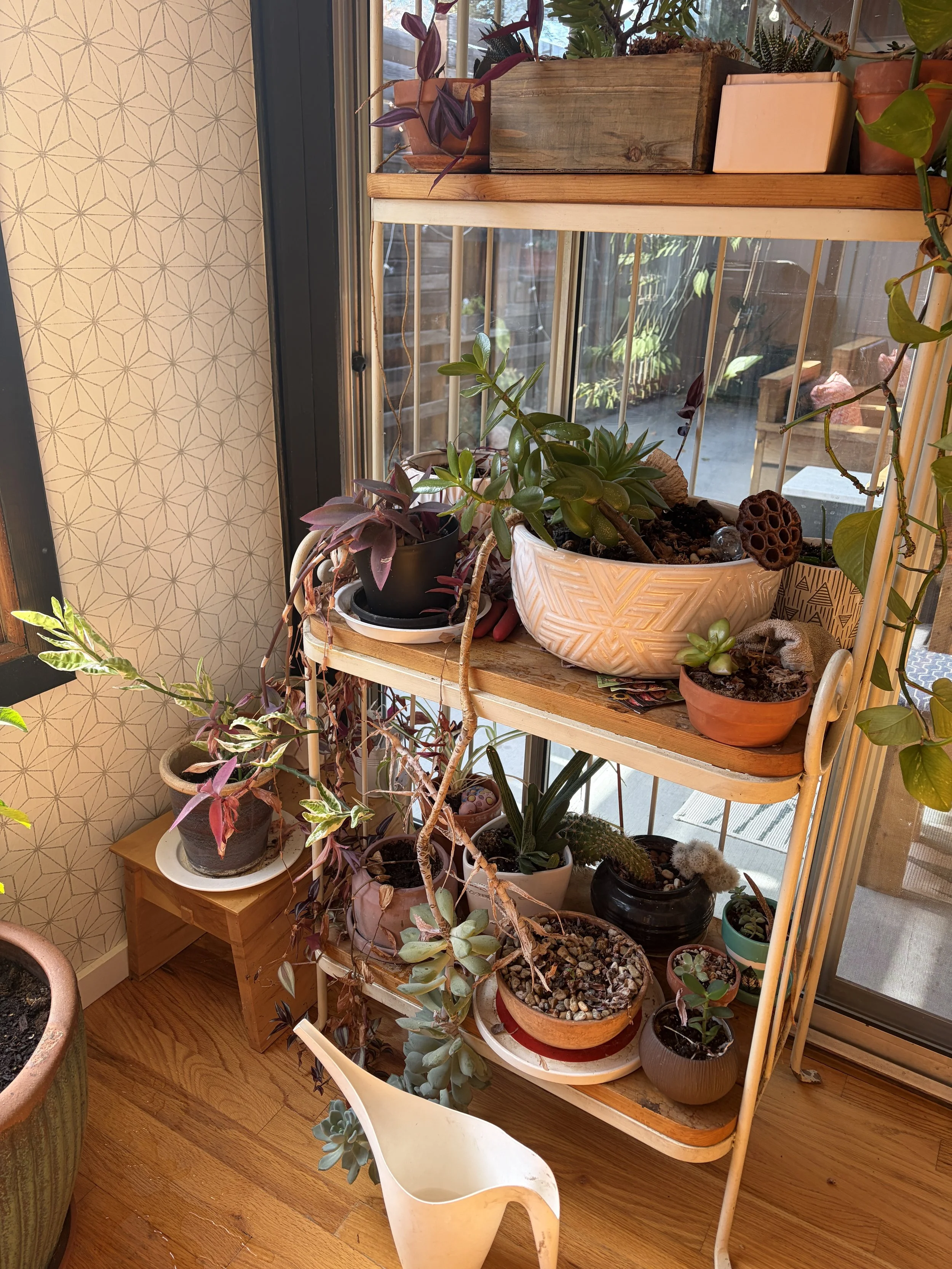
Look at my baby watering can next to all those plants. I love her little self.
Buying a new one when mine worked perfectly well seemed ridiculous. So naturally, I put a bigger one on my Christmas list. Because if someone else buys it for you, what can you do?
Then I started tracking my steps.
Now my inefficient little watering can was fantastic.
Fill it. Walk to a plant. Water. Walk back. Refill. Repeat.
Steps, steps, steps.
I took it off my Christmas list.
It also made me think about how much stuff we accumulate in the name of convenience. There’s actually a whole book about that: how humans went from living with relatively few possessions to believing we need a specialized tool for every imaginable task.
“Efficient is always better” is a rule worth questioning. Sometimes the thing designed to save us effort also takes something away. These days, when something annoys me, I try to ask: what if this is actually an opportunity?
I became more helpful around the house
My husband is a get-it-done kind of guy, and he is so efficient. If I don’t take out the garbage, he will. I’d honestly forgotten we even had a kitty litter box. It’s right by his office, and the minute it smells, he changes it (or he admits after reading this he just holds his breath). So, admittedly, I’d gotten a little lazy over the years.
Once every chore became a chance to move, I started seeing them differently. They were built-in opportunities to take care of my body and my household. I also started noticing how much of the load my husband had been quietly carrying. It’s a little humbling that a step counter is what finally opened my eyes, but I’ll take the lesson however it comes.
Now I take out the trash and change the litter box. More steps!
Dr. Langer’s work suggests that how we think about what we’re doing matters. Once I saw chores as movement rather than drudgery, they became part of taking care of myself, and even fun.
Sometimes you need to stop tracking
One night, we had friends over. At about 11:30 p.m., I looked at my phone and realized I was still 2,000 steps short of my goal.
So I started walking. Around the room. Down the hall. Back again.
My friends were in the middle of a heartfelt conversation while I marched laps around them. Everyone laughed, and my husband said, “Welcome to my life.” Did I immediately recognize the absurdity and stop? Not at first, but the moment stayed with me. Over the following months, I realized that something supposedly healthy had become a mini obsession.
If I didn’t have my phone with me, my steps didn’t “count.” I could have been moving all day, but if the number on the screen wasn’t high enough, I’d pace the halls late at night until I saw 10,000 appear.
At some point, the goal had become more important than the reason for having it.
Movement is supposed to contribute to a healthy life, not take precedence over friends, family, rest, and everything else that makes life healthy. And after months of tracking, I knew myself well enough to estimate how active I’d been.
So I stopped tracking so closely. There was something wonderfully liberating about realizing that a step still counts even when your phone doesn’t know you took it.
Numbers are tools, not truths. Following a habit mindlessly taught me the real lesson: balance.
Want to go deeper?
It turns out that this small shift, actively noticing, can change how we feel, both mentally and physically. I highly recommend Dr. Langer’s book The Mindful Body: Thinking Our Way to Chronic Health. It’s full of fascinating research on how much our mindset shapes our health.
Want to practice this kind of mindfulness together?
Join me on Zoom.
Happier Holidays: Mindfulness “Jedi Mind Tricks”
Tuesday, Nov 24
7:00 am and 6:30 pm MT
Two sessions, join either
Mindful Mondays
Mondays, Jan 4, 11, 25 and Feb 1
(no session Jan 18, MLK Day)
7:00–7:30 am MT (9:00–9:30 am ET)
Want easy ways to break up your sitting time? Check out my handouts, Sit Less, Move More and Exercise Snacks. How have you worked more steps into your life? What unexpected things has walking taught you? I’d love to hear. Share in the comments below or email me at hello@integrativepulmonaryclinic.com.
And I hope you’re walking while you’re reading this.